
What Does Reactivity Really Mean?
That’s a good question! Depending on where you look, there are many different definitions of the term.
If we look at the research on emotion, one definition of reactivity comes from the concept of affective style, originally developed by Richard Davidson. Affective style refers to individual differences in the three R’s of emotional responding: Reactivity, Regulation, and Recovery.
Reactivity refers to how easily an emotional response is triggered and how strong the response is. Regulation refers to the animal’s ability to regulate the strength and duration of the emotional response once it begins. And recovery refers to how quickly the animal returns to baseline afterward. These three processes overlap and interact with each other. For example, a more intense emotional response (reactivity) is often harder to regulate and recover from.
Importantly, there are individual differences in all of these things. Two individuals can encounter the same event and differ in how easily an emotional response is triggered, how intense that response becomes, how well they are able to regulate it, and how quickly they recover afterward.
Already, this is quite different from the way we tend to use the word reactive in the dog training and behavior world.
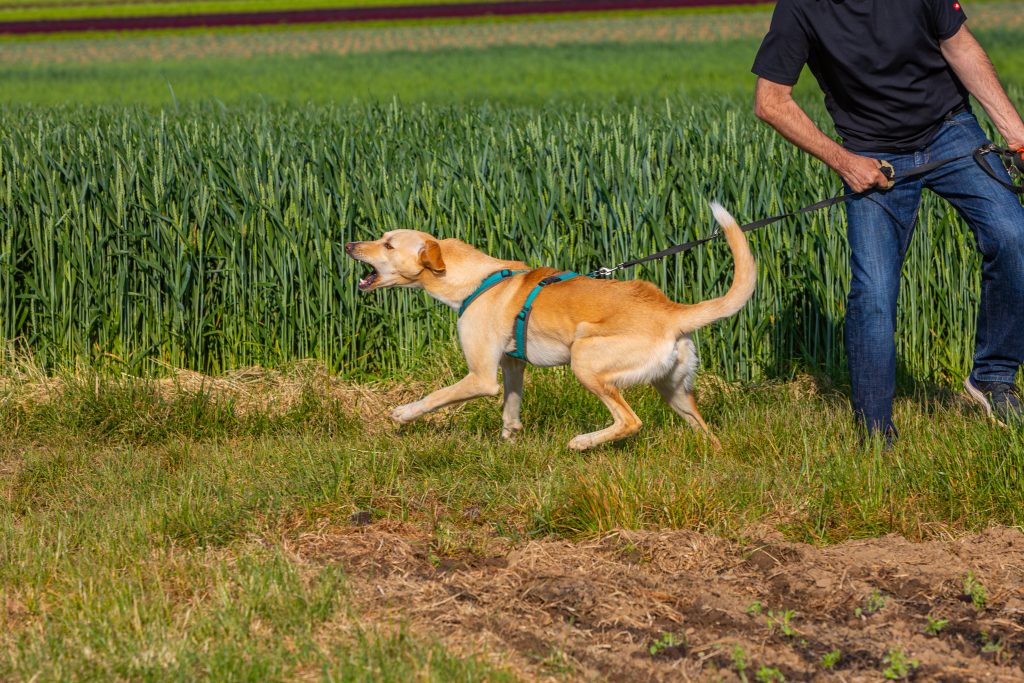
When someone says, “My dog is reactive,” they often mean their dog barks and lunges on leash. But barking and lunging are behaviors. On their own, they don’t tell us what is happening underneath the surface or whether two dogs displaying very similar behavior are experiencing the same thing.
When we start looking across different areas of research, things get even more complicated. The term reactive is also used to describe patterns of behavior related to agency and control, as well as different ways that animals cope with stress. And although these different uses overlap in some interesting ways, they don’t all mean exactly the same thing.
This is one of the problems we run into when we use terms like reactivity: the same word means different things in different scientific disciplines. And we haven’t even added in all of the different ways that trainers, behavior consultants, veterinarians, and the general public use the term yet!
If you find that confusing and frustrating, you are not alone. So where does that leave us?
In the next article, I’ll explore some additional definitions of reactivity and look at the shared themes. But, for now, I leave you with this thought: What if reactivity is less about a particular behavior and more about an individual’s pattern of responding to emotionally significant events?
If that’s the case, then simply changing the target behavior is unlikely to lead to meaningful and sustained improvement. A dog who barks, lunges, freezes, flees, or struggles to recover after an emotionally intense event may be showing us something about the way their emotional system is operating. We can – and should – use the information to directly inform our assessment and intervention.
Next time, we’ll expand our discussion to other uses of the term “reactivity” in the scientific world and how it can help us in practice. If you’d like to explore this topic more deeply, check out my Canine Impulsivity, Reactivity, and Fear Mentorship starting on October 19th.